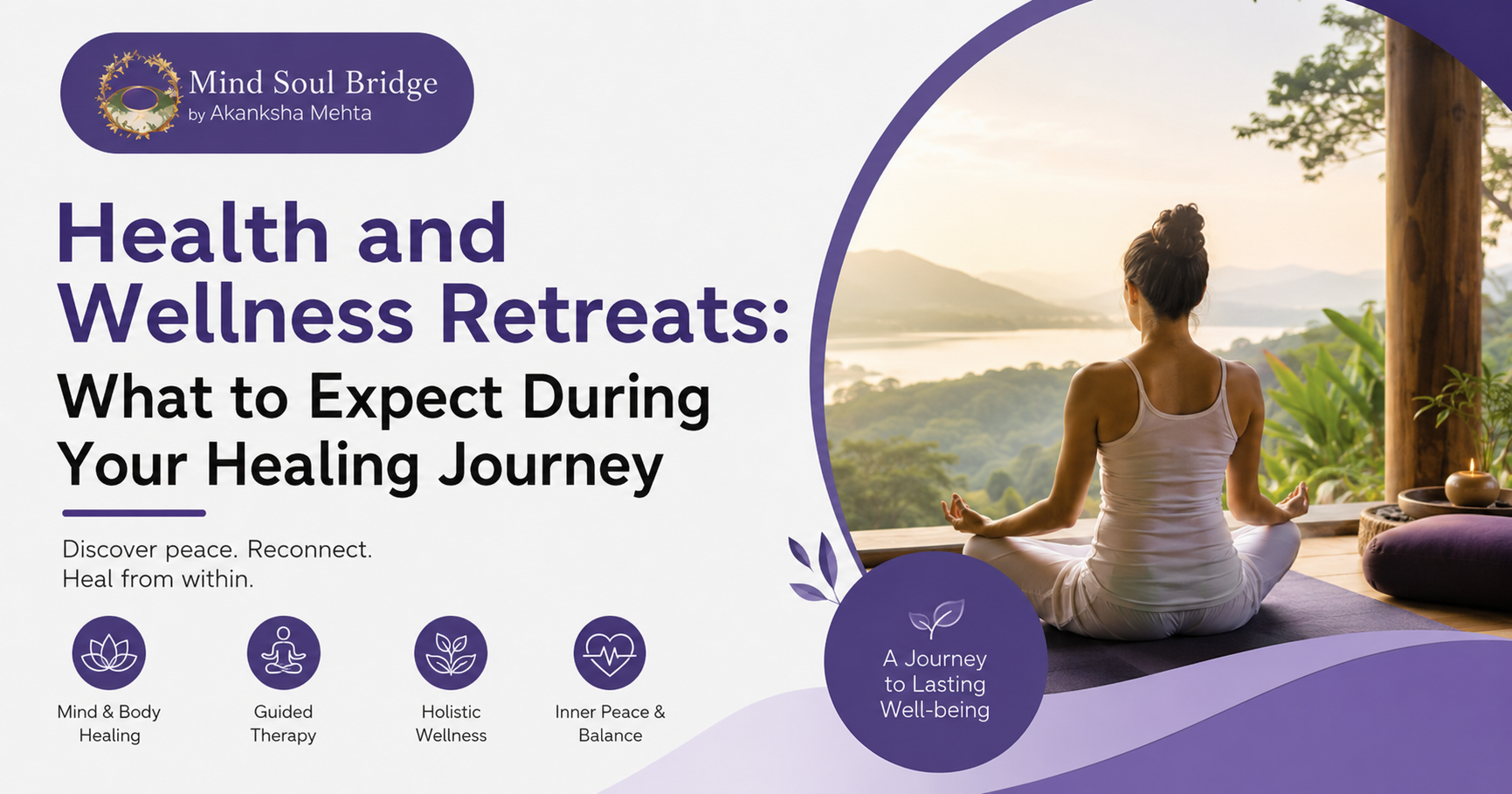




Sometimes you don’t need another busy weekend. You need a pause. When work, relationships, responsibilities, and constant notifications start taking up every bit of mental space, even resting at home may not feel restful. That’s where health and wellness retreats can offer something different. They create a chance to step away from your usual surroundings, slow down, and pay attention to what’s happening inside.
A retreat isn’t about escaping your life or finding an instant solution. It’s about creating enough distance from everyday pressure to reflect, reconnect, and begin making changes that feel realistic.
A retreat can look different depending on the programme, location, and your needs. Some include quiet reflection and nature. Others involve group discussions, movement, journalling, meditation, or structured therapy sessions.
At Mind Soul Bridge, retreats are designed around emotional exploration rather than simply providing a holiday. Their approach can include guided reflection, therapeutic workshops, relational exercises, embodied practices, and culturally rooted experiences. So, don’t expect to spend the entire day sitting silently or attending back-to-back activities. The idea is to create a rhythm that gives you room to breathe and think.
Think about how difficult it can be to hear your own thoughts when you’re constantly rushing. There’s always an email. Another meeting. A family responsibility. Something waiting to be done. A retreat temporarily changes that environment.
Being surrounded by nature or simply staying somewhere unfamiliar can make it easier to notice thoughts and feelings you’ve been pushing aside. Mind Soul Bridge describes its travel retreats as intentional pauses designed to help people step away from burnout, chronic overthinking, and relational stress. That distance can sometimes bring a perspective you couldn’t find while following the same daily routine.
Wellness therapy retreats often combine therapeutic work with activities that encourage relaxation and self-awareness.
You might take part in guided conversations, mindfulness exercises, journalling, breathwork, nature walks, or group sessions. Some retreats may also include yoga, meditation, or other reflective practices. The point isn’t to fill every hour with activities. Quiet time matters too.
You may have moments when you’re simply sitting somewhere peaceful, thinking about what you’ve been feeling lately. Those moments can be just as valuable as a structured session.
A change of scenery can do more than give you pretty photographs. Travel therapy retreats combine travel with intentional emotional work. Rather than treating travel as an escape, the experience uses a new environment to encourage reflection and self-exploration.
Mind Soul Bridge offers individual immersive retreats as well as small-group options, including groups of around four to ten participants. Its retreats may take place in mountain towns, coastal settings, forests, heritage spaces, or nature-based locations. The destination matters, but the therapeutic process matters more.
This part is important.
A retreat isn’t a magic reset button. You won’t necessarily return home without anxiety, difficult memories, or complicated emotions. What you may gain is something more useful: a better understanding of yourself.
Mental health retreats can provide space to explore emotional patterns, stress, burnout, boundaries, relationships, or feelings that have been difficult to process in everyday life. Mind Soul Bridge describes its retreats as supportive spaces for people who want depth rather than simply an escape. The real work often continues after you return home.
Ideally, you shouldn’t leave with a suitcase full of inspirational quotes and no idea what to do next. A useful retreat should leave you with something practical.
Perhaps you’ve recognised a pattern you want to change. Maybe you’ve understood a boundary you need to set. You might have discovered that rest isn’t something you need to earn. Or perhaps you’ve found a few simple practices that help you feel more grounded. These small insights can become meaningful when you carry them into ordinary life.
A retreat may be worth considering if you’re feeling emotionally drained, stuck, disconnected, or caught in patterns that you haven’t been able to shift. Mind Soul Bridge specifically describes its retreats as suitable for people experiencing burnout, emotional exhaustion, relational stress, overthinking, or a desire to deepen existing therapeutic work.
If you’re dealing with a serious mental health concern or an immediate crisis, however, a retreat shouldn’t replace appropriate clinical or emergency support.
The value of health and wellness retreats isn’t simply in getting away for a few days. It’s in having enough space to slow down, listen to yourself, and explore what may have been pushed aside by everyday responsibilities. Whether through nature, guided reflection, therapy, or meaningful conversations, a retreat can become a starting point for deeper change. Mind Soul Bridge brings together therapeutic support, travel, reflection, and a trauma-informed approach to create a healing experience that goes beyond a simple getaway.
Health and wellness retreats can include a mix of therapeutic sessions, guided reflection, mindfulness, nature-based activities, journalling, movement, and quiet personal time. The exact schedule depends on the retreat. You shouldn’t expect constant activities; having unstructured time to rest and process your thoughts is often an important part of the experience.
Yes, they can be. Wellness therapy retreats may provide an opportunity to explore themes you’ve already been working on in therapy from a different setting. However, it’s worth discussing the idea with your existing therapist, particularly if you’re working through significant emotional or mental health concerns and want to ensure the retreat fits your current treatment.
A holiday is generally about relaxation, sightseeing, or spending time away from home. Travel therapy retreats have a different purpose. Travel becomes part of a guided therapeutic experience involving reflection, emotional exploration, group or individual work, and supportive activities. The intention isn’t simply to return refreshed, but to understand yourself a little more deeply.
Mental health retreats can involve structured therapeutic sessions, emotional reflection, mindfulness practices, nature immersion, group conversations, and activities focused on stress management or self-awareness. Some programmes are individual, while others involve small groups. A suitable retreat should also have clear boundaries and appropriate professional support rather than promising instant emotional transformation.
Usually, a retreat shouldn’t automatically be viewed as a replacement for ongoing therapy. It can complement therapeutic work by providing a concentrated period for reflection and emotional exploration. If you’re already receiving mental health treatment, discuss the retreat with your therapist first so that the experience supports rather than disrupts your existing care.


19 Jan 2026 · By mindsoulbridge · 4 min read
Every relationship goes through ups and downs, but when challenges […]
Read Post →
12 Aug 2026 · By mindsoulbridge · 7 min read
Modern life can leave very little room to breathe. Work […]
Read Post →
09 Sep 2025 · By mindsoulbridge · 2 min read
Healing doesn’t always start with solutions—it starts with safety. This post explores the power of creating a safe space where vulnerability is met with compassion, not judgment. It’s about being seen, valued, and reminded that you are not broken, allowing healing to unfold naturally and gently.
Read Post →
Guiding individuals and couples towards inner peace, stronger relationships, and meaningful growth through ethical and inclusive practice.

© 2026 All Right Reserved | Mind Soul Bridge
Designed & Developed by AMITKK Digital Solutions
