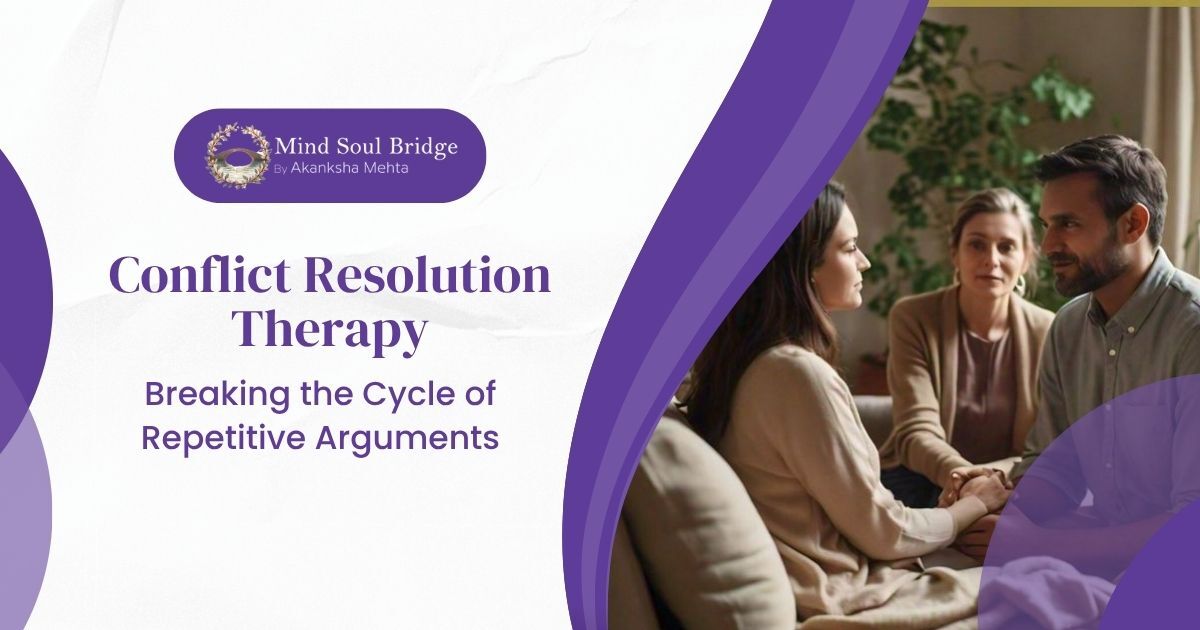




Every couple argues. That’s completely normal. What isn’t normal is having the same argument over and over again until both people can almost predict every sentence before it’s spoken. One person feels unheard. The other feels criticised. Voices get louder, someone shuts down, and eventually the conversation ends without solving anything. A few days later, the same disagreement comes back.
If that sounds familiar, you’re not alone. Many couples experience repetitive conflict because the real issue isn’t always what they’re arguing about. It’s often how they’re communicating. That’s where Conflict Resolution Therapy in Gurgaon can help people understand unhealthy patterns and learn healthier ways to navigate disagreements. The goal isn’t to stop arguments completely. It’s to stop arguments from becoming endless cycles.
Imagine replaying the same film every week. The topic may change—money, household responsibilities, parenting, work stress, or family expectations—but the emotional pattern stays the same. One partner becomes defensive. The other becomes frustrated. Someone withdraws.
Someone keeps pushing. Eventually, nobody feels heard. This is exactly why Conflict Resolution Therapy in Gurgaon often focuses less on the specific disagreement and more on the communication pattern underneath it. Once couples recognise these repeated behaviours, they’re often better equipped to respond differently the next time conflict arises.
It may begin with something small. Dirty dishes. Late replies to messages. Weekend plans. Household expenses. On the surface, these seem like simple disagreements. But underneath, they often represent much bigger emotions like feeling ignored, unsupported, unappreciated, or misunderstood.
That’s why solving only the practical issue doesn’t always stop the conflict from returning. Unless both partners understand the emotional need behind the disagreement, the same cycle usually continues.
Many people believe they’re listening during an argument. In reality, they’re preparing their next response. Real listening looks different. It involves understanding before responding. It means asking questions instead of making assumptions. It also means allowing your partner to finish speaking without immediately becoming defensive.
Many approaches to communication therapy for couples encourage active listening techniques because feeling genuinely heard often reduces emotional tension before the actual problem is even discussed. Sometimes slowing the conversation down changes everything.Resolve Relationship Conflicts
This is probably one of the biggest misconceptions. Healthy relationships still include disagreements. The difference is how those disagreements are handled. Some couples criticise each other personally. Others focus on solving the issue together. That shift in mindset can completely change the outcome of difficult conversations.
Approaches used in relationship conflict management often encourage couples to view problems as shared challenges rather than battles that one person has to win. When both people stop trying to defeat each other, they’re usually better able to work as a team.
People often expect dramatic solutions. In reality, lasting change usually comes from small adjustments repeated consistently.
For example:
These changes may seem simple, but together they can gradually improve the quality of communication. Many forms of couples conflict counselling focus on helping partners practise these everyday habits until healthier communication becomes more natural.
Some couples wait until their relationship feels completely overwhelmed before seeking support. Others reach out much earlier. Neither approach is right or wrong. The important thing is recognising when repetitive arguments are affecting emotional wellbeing, daily life, or the relationship itself.
Professional support isn’t about deciding who’s right. It’s about creating a space where both people can communicate more openly, understand each other’s perspectives, and develop healthier ways of resolving conflict.
Disagreements are part of every relationship. Repeated arguments don’t necessarily mean a relationship is beyond repair, but they can be a sign that communication patterns need attention. Learning to listen differently, express emotions more clearly, and approach conflict with greater understanding can make everyday conversations feel much less exhausting.
That’s one reason why Mind Soul Bridge may be helpful for couples who find themselves stuck in the same arguments without reaching meaningful solutions. If ongoing conflict is affecting your relationship or emotional well-being, speaking with a qualified mental health professional can provide guidance that’s tailored to your individual circumstances.
Conflict Resolution Therapy in Gurgaon generally involves working with a qualified mental health professional to identify unhealthy communication patterns, understand the underlying causes of repeated disagreements, and develop healthier ways of discussing difficult topics. The aim is to improve understanding rather than simply end arguments.
Yes. Disagreements are a natural part of most relationships because two people will not always think or feel the same way. What matters more is how those disagreements are handled, whether both partners feel respected, and whether conflicts eventually lead to understanding rather than repeated frustration.
Communication therapy for couples focuses on improving how partners express themselves and listen to each other. Sessions may explore active listening, emotional awareness, conflict de-escalation, and healthier communication habits so that disagreements become more productive instead of repetitive or emotionally draining.
In many cases, yes. When both partners are willing to reflect on their communication patterns and work together, repetitive conflicts can become more manageable. Progress usually takes time, consistency, and openness, but healthier conversations are often possible with mutual effort and understanding.
Marriage conflict resolution refers to strategies that help married couples address disagreements constructively rather than allowing them to escalate. It often involves improving communication, recognising recurring conflict patterns, understanding emotional needs, and developing practical ways to resolve differences respectfully over time.


06 Jul 2026 · By mindsoulbridge · 6 min read
Every relationship goes through difficult phases. Sometimes it’s endless misunderstandings. […]
Read Post →
03 Jul 2026 · By mindsoulbridge · 6 min read
Every couple argues. Sometimes it’s about household chores. Sometimes it’s […]
Read Post →
08 Jul 2026 · By mindsoulbridge · 5 min read
Modern relationships are more complex than ever before. Couples today […]
Read Post →
Guiding individuals and couples towards inner peace, stronger relationships, and meaningful growth through ethical and inclusive practice.

© 2026 All Right Reserved | Mind Soul Bridge
Designed & Developed by AMITKK Digital Solutions
