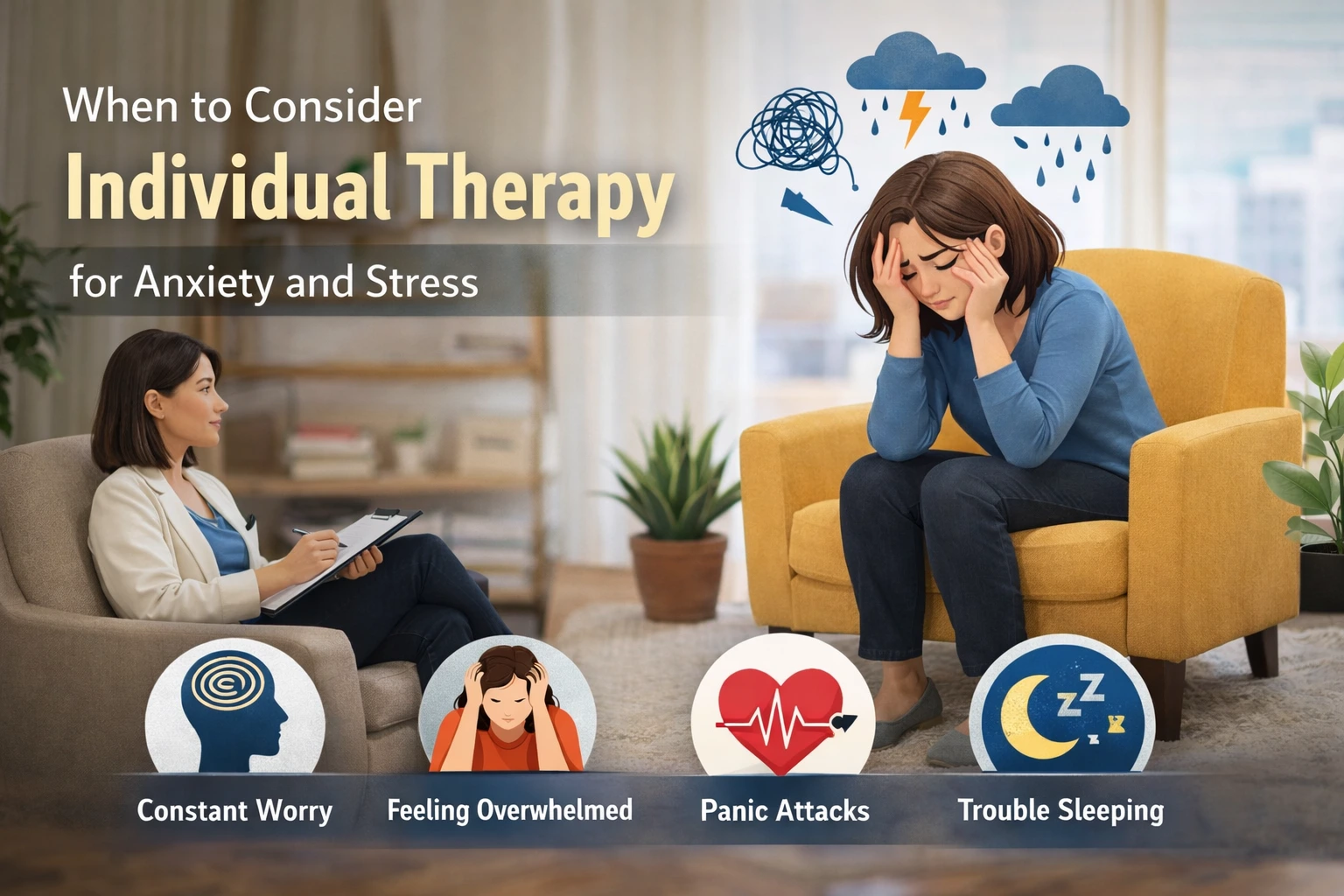




Life presents many challenges, and at times those challenges can feel overwhelming. Individual therapy is a powerful and supportive approach that helps people navigate emotional difficulties, especially when anxiety or stress begins to interfere with daily life. Understanding when to consider individual therapy can play a crucial role in improving mental wellbeing, offering clarity, relief, and a structured path forward.
This guide explores common indicators that suggest it may be time to seek professional help, explains how therapy supports emotional healing, and outlines practical steps to begin your therapeutic journey with confidence.
Individual therapy is a one-to-one therapeutic process between a person and a trained mental health professional. It provides a confidential space to explore emotions, understand unhelpful thought patterns, develop coping strategies, and work towards personal goals. Therapy is not only for moments of crisis; it can also be a proactive form of mental health support therapy that strengthens emotional resilience, self-awareness, and overall wellbeing.
Recognising signs you need individual therapy is not always easy, particularly when stress and anxiety become part of everyday life. However, certain experiences may signal the need for professional support.
Persistent anxiety or constant worry that disrupts daily routines or relationships can indicate more than temporary stress. When anxious thoughts feel overwhelming or uncontrollable, seeking therapy for anxiety symptoms can help restore emotional balance. Likewise, ongoing emotional stress – such as prolonged sadness, irritability, or emotional numbness – may benefit from structured emotional stress counseling, offering a safe space to process difficult feelings.
Difficulty functioning in daily life is another important indicator. Struggling at work, withdrawing from relationships, or losing interest in activities once enjoyed may point to deeper emotional challenges. Avoidance behaviours and social isolation can further intensify anxiety over time and reduce overall quality of life.
In some cases, emotional distress may present through physical symptoms such as fatigue, headaches, digestive issues, or disrupted sleep patterns. When no clear medical cause is identified, these symptoms may be linked to stress or anxiety and can respond positively.
Individual therapy goes beyond conversation – it focuses on learning effective tools to manage emotional distress and develop healthier coping mechanisms. Therapists help individuals regulate emotions, challenge negative thinking patterns, and respond to stress more constructively.
Therapy also offers a safe, non-judgemental environment where thoughts and feelings can be explored openly. This supportive space is essential for healing and long-term emotional growth. Over time, therapy builds resilience, providing skills that support wellbeing beyond the therapy room.
Certain situations require prompt therapeutic care, including thoughts of self-harm, sudden mood changes, panic attacks that interfere with daily life, or persistent feelings of hopelessness. In these cases, immediate support can be vital.
Starting therapy may feel daunting, but preparation can ease the process. Identifying personal goals, writing down concerns, being open during sessions, and staying committed to the process all contribute to meaningful progress. Therapy is a journey, and consistency plays a key role in positive outcomes.
Deciding about individual therapy is a personal and empowering step. If anxiety, emotional stress, or ongoing discomfort are affecting your life, early support can help restore balance and confidence. Seeking help is an act of self-care and strength.
At Mind Soul Bridge, we understand how overwhelming emotional challenges can feel. Our compassionate team offers personalised care and ongoing mental health therapy, guiding individuals towards resilience, clarity, and emotional wellbeing every step of the way.
1. How do I know when to consider individual therapy?
You might consider individual therapy if ongoing anxiety, persistent stress, or emotional distress begins to interfere with daily life. Changes in mood, difficulty concentrating, avoidance of social interactions, or physical symptoms linked to stress are common indicators that support from a professional therapist may be helpful.
2. What are common signs you need individual therapy?
Signs you need individual therapy can include prolonged feelings of sadness, excessive worry, irritability, loss of pleasure in activities, or trouble sleeping. Other signs include avoiding social contact, struggling with work or study responsibilities, or feeling overwhelmed daily – suggesting it’s time to seek supportive therapeutic care.
3. Can therapy for anxiety symptoms really help?
Yes, therapy for anxiety symptoms has strong evidence supporting its effectiveness. It provides tools to manage anxious thoughts, identify triggers, develop healthy coping mechanisms, and reduce physical tension. Working with a trained therapist can make a meaningful difference in regulating emotions and enhancing overall wellbeing.


13 Jan 2026 · By mindsoulbridge · 5 min read
Anxiety is one of the most common mental health challenges […]
Read Post →
Guiding individuals and couples towards inner peace, stronger relationships, and meaningful growth through ethical and inclusive practice.

© 2026 All Right Reserved | Mind Soul Bridge
Designed & Developed by AMITKK Digital Solutions
