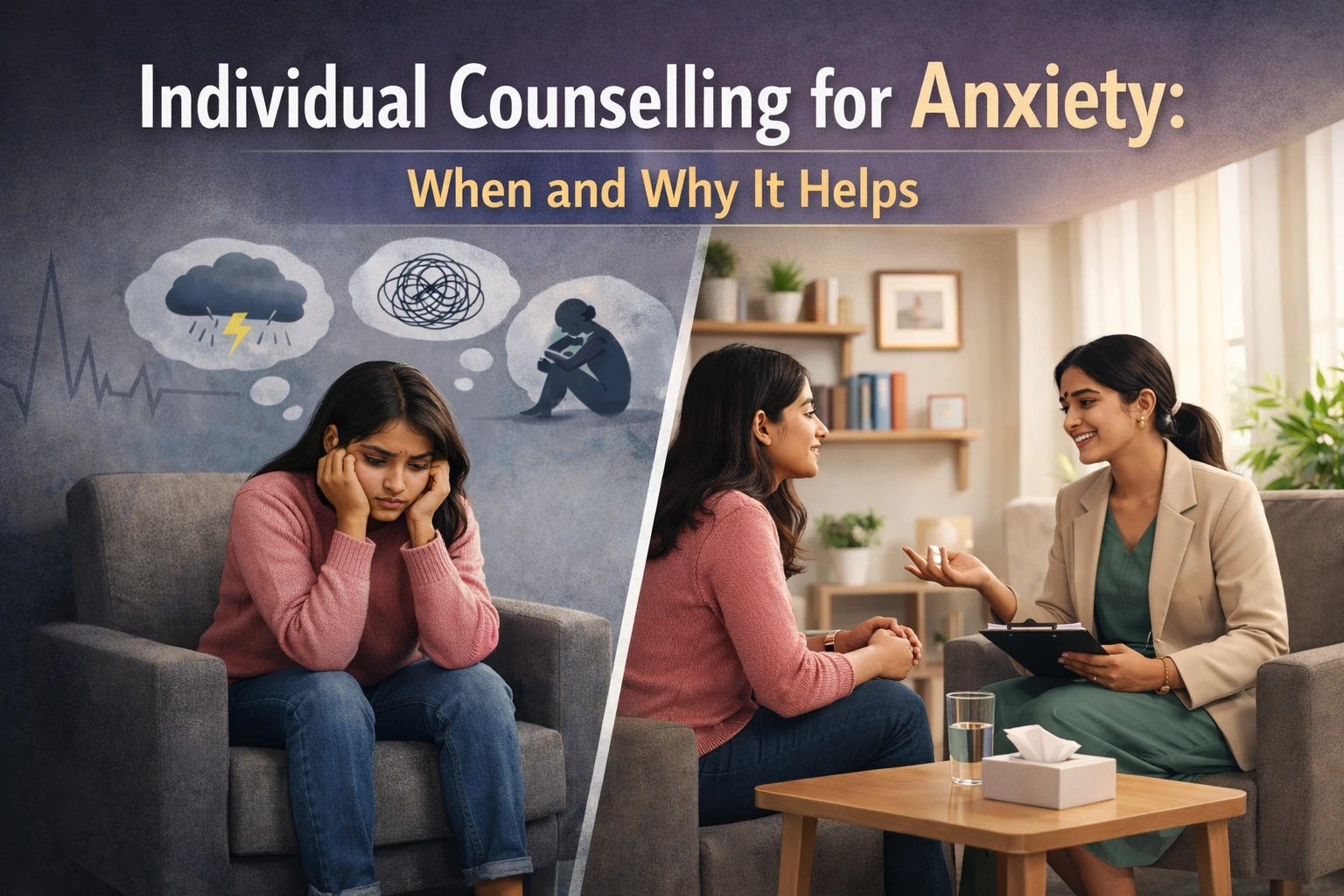




Anxiety is one of the most common mental health challenges experienced across all age groups. While occasional worry can be a natural part of life, persistent feelings of fear, tension, and unease that interfere with daily functioning often require professional support. This is where individual counselling for anxiety can make a meaningful difference. Through personalized guidance, skilled therapists help individuals understand, manage, and overcome anxiety symptoms that may be affecting their quality of life.Anxiety can manifest in many ways – from constant worrying and restlessness to sleep disturbances, social withdrawal, or physical symptoms like headaches and muscle tension. Identifying when anxiety has become more than a passing concern is the first step toward healing. In this blog, we explore the benefits of therapy for anxiety and stress, when it’s helpful to seek support, and how it can empower individuals to regain control.
Before diving into counselling, it’s important to recognize what anxiety entails. Anxiety is a normal emotional response to stress, danger, or uncertainty. However, when these feelings persist daily and begin to affect work, relationships, or self-confidence, they may signal an anxiety disorder. Left unaddressed, prolonged anxiety can contribute to depression, impaired concentration, and reduced overall wellbeing.Individual approaches such as anxiety counseling provide a space to explore the root causes of these feelings, break unhelpful patterns, and develop practical coping skills.
Counseling for anxiety issues involves one-on-one sessions with a trained mental health professional who offers tailored support based on a person’s unique experiences. Unlike group therapy or self-help methods, individual therapy focuses solely on the client’s needs, allowing for deeper exploration of thoughts, emotions, and behaviors contributing to anxiety.
During these sessions, individuals learn strategies to manage symptoms, challenge negative thought patterns, and build resilience. The therapeutic relationship itself often becomes a source of trust and understanding, helping individuals feel heard and supported throughout their healing journey.
While mild anxiety might be manageable through lifestyle changes or self-care practices, there are times when professional support becomes essential. Individual counselling for anxiety is beneficial when:
Seeking support early can prevent anxiety from becoming more entrenched and help individuals develop effective coping mechanisms before symptoms escalate.
Anxiety therapy sessions vary depending on the therapist’s approach and the individual’s needs. However, most effective counselling combines research-based strategies with personalized insights. Common elements include :
This structured yet flexible approach ensures each person receives support that aligns with their specific concerns.
The benefits of therapy for anxiety and stress extend far beyond symptom reduction. Through consistent engagement in counselling, individuals often experience:
Many clients also find that counselling strengthens other areas of life, such as relationships, focus, and emotional balance.
Anxiety can be a challenging experience, but individuals do not have to navigate it alone. Individual counselling for anxiety offers a supportive, personalized journey toward understanding and managing emotional distress. With professional guidance, people learn to face their fears, build resilience, and embrace a more balanced life. If you’re ready to take the next step, support from dedicated experts at Mind Soul Bridge can help you move forward with confidence and care.
You may benefit from Individual Counselling for Anxiety if persistent worry or fear interferes with daily life, such as work, relationships, or sleep. When anxiety feels overwhelming, uncontrollable, or begins to affect decision-making and emotional wellbeing consistently, professional guidance can provide effective tools for coping and recovery.
Effective therapy for anxiety and stress often includes cognitive-behavioral techniques, mindfulness practices, relaxation exercises, and emotional regulation strategies. Therapists tailor these approaches to your needs, helping you challenge unhelpful thoughts, reduce physical tension, and build long-term resilience in the face of stress triggers.
Typical anxiety therapy sessions last between 45 and 60 minutes, with frequency depending on individual needs. Some people benefit from weekly sessions initially, while others transition to bi-weekly or monthly check-ins as their symptoms improve. Your therapist will collaborate with you to create a schedule that fits your goals.

16 Jan 2026 · By mindsoulbridge · 4 min read
Life presents many challenges, and at times those challenges can […]
Read Post →
Guiding individuals and couples towards inner peace, stronger relationships, and meaningful growth through ethical and inclusive practice.

© 2026 All Right Reserved | Mind Soul Bridge
Designed & Developed by AMITKK Digital Solutions
